
Edwin B. Forsythe NWR
Location
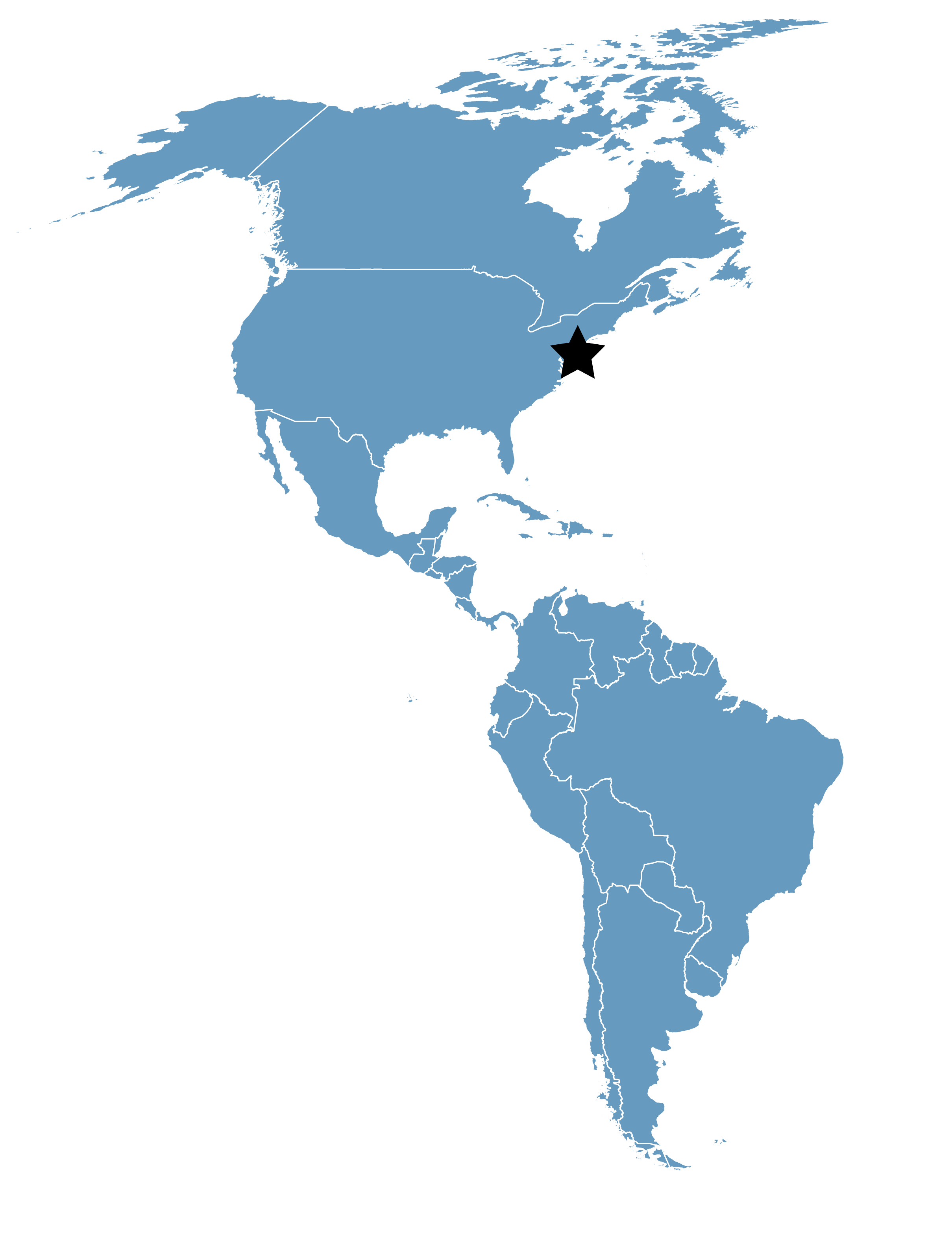
New Jersey, United States
Category
Regional
Basis for Designation
More than 20,000 shorebirds annually.
Size
18,382 hectares (45,423 acres)
Date Designated
March 2001
Site Owner
U.S. Fish and Wildlife Service
Site Partners
Friends of Forsythe NWR
NJ Department of Environmental Protection
NJ Audubon Society, Atlantic Audubon Society
Conserve Wildlife Foundation of NJ, Rutgers University
The Richard Stockton College of NJ
Barnegat Bay National Estuary Program
American Littoral Society
Jacques Cousteau National Estuarine Research Reserve
Overview
The Edwin B. Forsythe National Wildlife Refuge (NWR) extends more than 50 miles along the Atlantic coast of southeastern New Jersey, in Atlantic, Burlington, and Ocean Counties. This refuge was created by a 1984 resolution combining the Brigantine NWR and the Barnegat NWR (established in 1939 and 1967, respectively) into one refuge in memory of Congressman Forsythe, a great conservationist. The mission of the originating refuges was to preserve estuarine habitats important to Atlantic Brant (Branta bernicla), American Black Duck (Anas rubripes), and rails (Rallidae). Shorebird use of the E.B. Forsythe NWR peaks during the spring migration.
The refuge was one of the first four sites in the United States to have been designated as a Wetland of International Importance by the Ramsar Convention.
The refuge was one of the first four sites in the United States to have been designated as a Wetland of International Importance by the Ramsar Convention. Refuge lands and waters provide important resting and feeding habitat for tens of thousands of shorebirds, ducks, geese, and wading birds during spring and fall migrations. The E.B. Forsythe NWR is part of the NOAA Jacques Cousteau National Estuarine Research Reserve and also a part of the EPA Barnegat Bay Estuary Program Area. A portion of the refuge lies within the Pinelands International Biosphere Reserve.
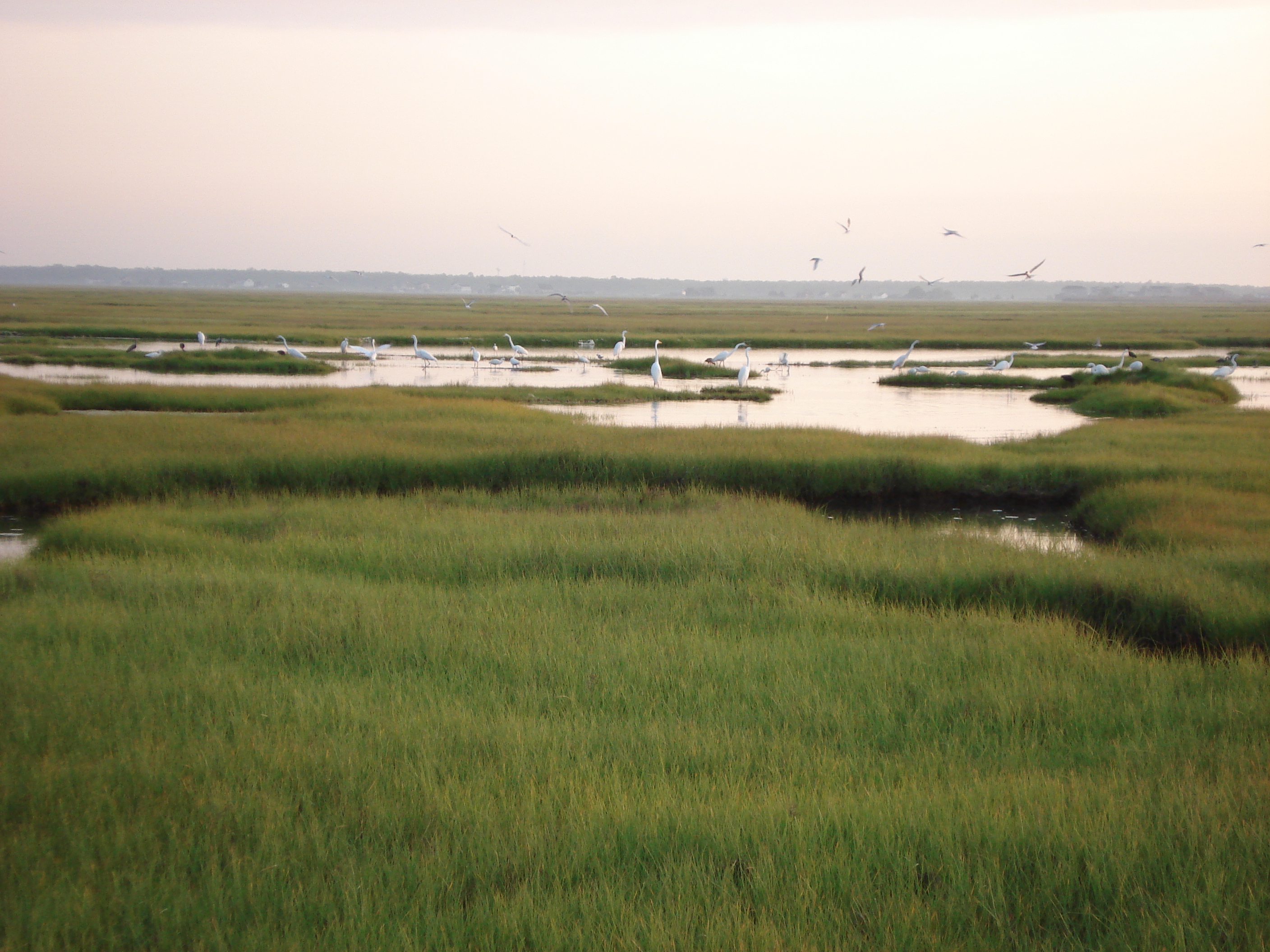
More than 80% of the refuge is composed of estuarine intertidal wetlands dominated by salt marsh cordgrass (Spartina alterniflora) and saltmeadow cordgrass (Sp. patens). The refuge is located entirely within the Atlantic Coastal Plain, with elevations ranging from sea level to 50 feet above mean sea level (msl).
Birds
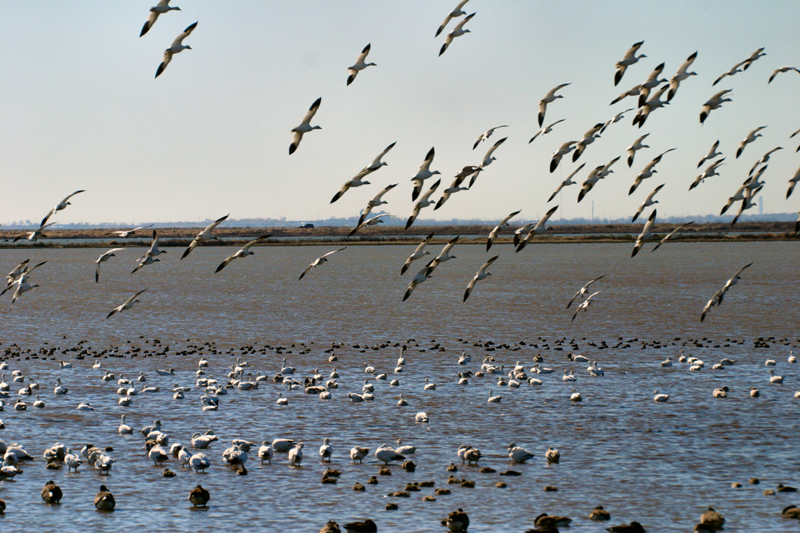
The coastal wetlands of New Jersey are of international importance to migratory birds, especially wintering waterfowl. Some 39% of the Atlantic Flyway population of American Black Duck (Anas rubripes), 67% of the flyway’s Atlantic Brant (Branta bernicla), and 34% of the flyway’s Greater Snow Goose (Chen caerulescens) have been recorded in coastal New Jersey during the U.S. Fish and Wildlife Service’s mid-winter inventory. Shorebird use of the E.B. Forsythe NWR peaks during the spring migration. The most common species are: Sanderling (Calidris alba), Semipalmated Sandpiper (C. pusilla), Dunlin (C. alpina), Semipalmated Plover (Charadrius semipalmatus), Short-billed Dowitcher (Limnodromus griseus), Willet (Catoptrophorus semipalmatus), Greater Yellowlegs (Tringa melanoleuca), Lesser yellowlegs (T. flavipes), Black-bellied Plover (Pluvialis squatarola), Least Sandpiper (C. minutilla), Ruddy Turnstone (Arenaria interpres), Red Knot (C. canutus), Whimbrel (Numenius phaeopus), Spotted Sandpiper (Actitis macularia), and Pectoral Sandpiper (C. melanotos).
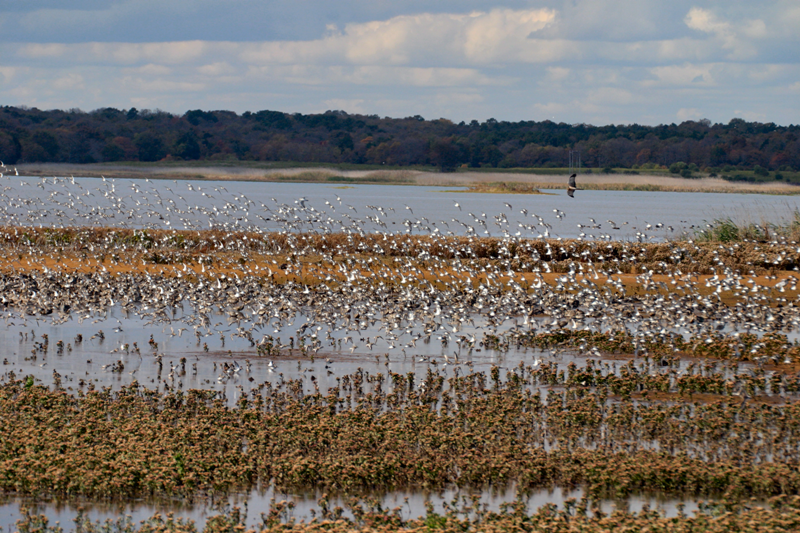
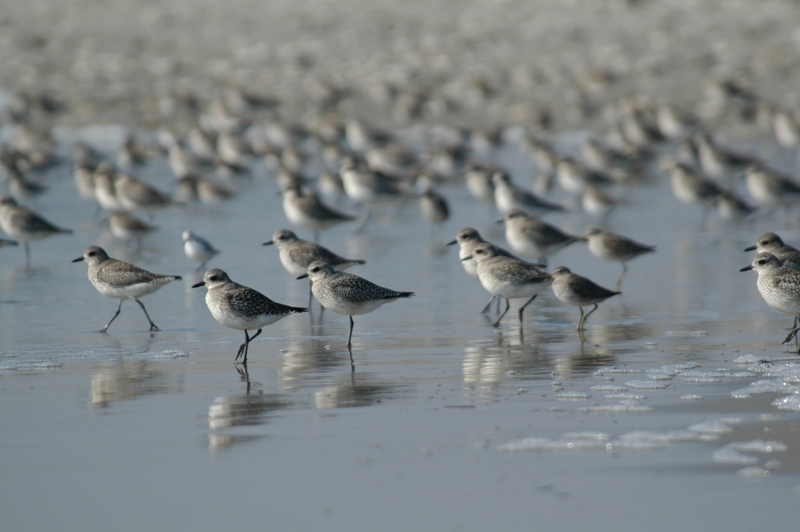
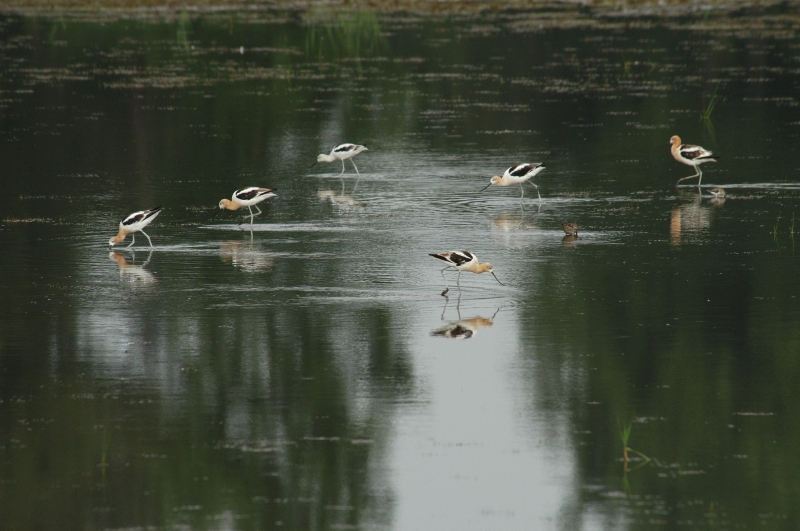
Shorebirds at Edwin B. Forsythe NWR. Photo: John Orlich.
Many waterbird species are common at the refuge, including Great Blue Heron (Ardea herodias), Great Egret (Casmerodious albus), Snowy Egret (Egretta thula), Black-crowned Night Heron (Nycticorax nycticorax), Glossy Ibis (Plegadis falcinellus), and Cattle Egret (Bubulcus ibis). Several species of herons and egrets nest on or near the refuge, frequently foraging in the salt marshes, streams, ponds, and impoundments. The refuge provides breeding, migratory stopover, and wintering habitats to a variety of raptors and owls, including Red-tailed Hawk (Buteo jamaicensis), Turkey Vulture (Cathartes aura), Northern Harrier (Circus cyaneus), Geat Horned Owl (Bubo virginianus), and Short-eared Owl (Asio flammeus). The refuge also supports many songbirds species and is especially important to those dependent upon marshes and coastal island habitats for nesting, such as Seaside Sparrow (Ammodranus maritimus), Marsh Wren (Cistothorus palustris), and Sedge wren (C. platensis). A large number of birds nesting on or migrating through the refuge are Neotropical migrants (wintering in Central and South America).
Conservation
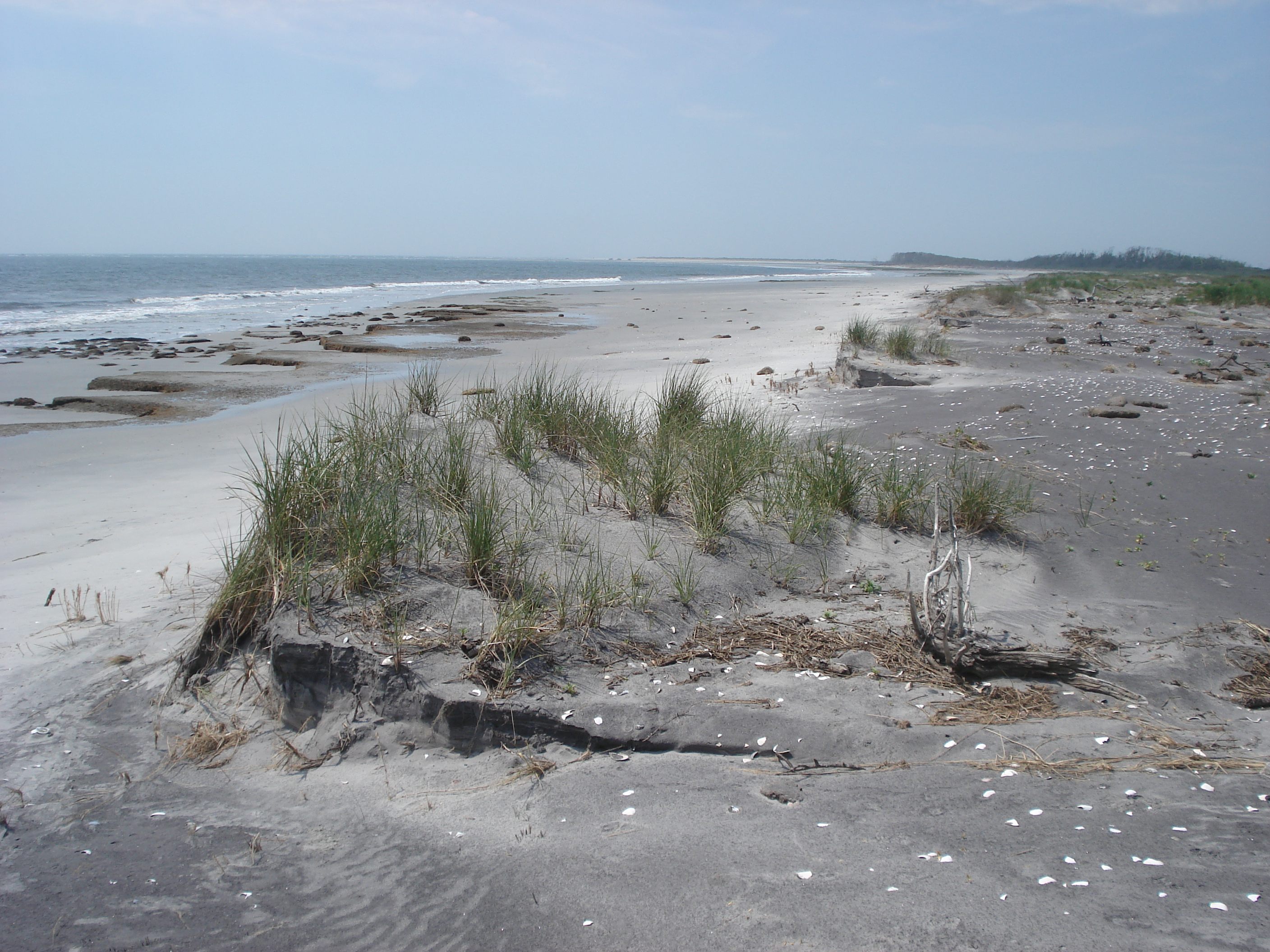
More than 6,000 acres of the refuge are designated as the Brigantine Wilderness Area, including Holgate and Little Beach–two of the few, undeveloped barrier beaches remaining in New Jersey. They provide essential nesting and feeding habitat for the rare Piping Plover, Black Skimmer, and Least Tern. These birds, along with other beach-nesting species, have suffered drastic population declines as human beach developments and recreational uses have eliminated much of their habitat. The refuge’s dunes are prime bird nesting habitat constantly being shifted and changed by wind and wave action. Beach grasses, which trap blowing sand and stabilize the dunes, provide important cover for wildlife, especially young birds. The refuge manages its fragile beach areas for the rare birds which depend on them. Use by humans and their pets can result in severe erosion, loss of habitat, and harm to beach-nesting birds. In order to minimize disturbance to birds and their habitat, public access is limited or prohibited where appropriate. Holgate Beach is closed to the public during nesting season; Little Beach is closed all year except to those with special-use permits for research or education.